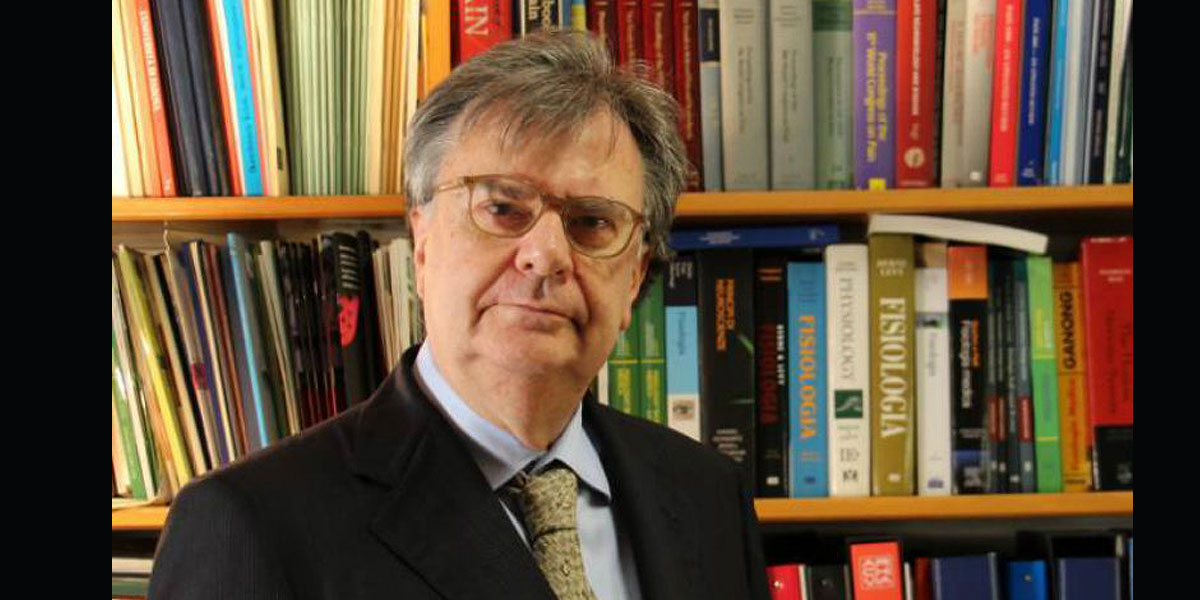
02 Nov Interview with Prof. Carlo Adolfo Porro, Rector, Università degli Studi di Modena e Reggio Emilia (UNIMORE)
As Rector of one of Italy’s oldest universities, how do you view the current state of higher education in the country and what distinctive contribution does UNIMORE make in shaping its future?
Italy’s university system is similar to other European countries, but it is important to understand its unique context. It performs very well academically and has a strong research tradition, yet it has long suffered from underfunding. For decades, Italian public universities have received significantly less public funding than counterparts in countries like France or Germany. As a result, we have fewer professors and researchers and although student numbers are only slightly lower, the percentage of students completing bachelor’s and master’s degrees remains considerably below the European average. Still, our research output is remarkable: the number of publications and citations per researcher is about 80% higher than the French or German average.
However, public universities face rigid funding rules. Most funding comes from the government through the Fondo di Finanziamento Ordinario (FFO). Tuition fees are also linked to the FFO, so universities can’t increase student contributions unless public funding rises too. This means we lack flexibility to compensate for cuts or invest independently. One key priority for the future is to give universities more freedom to diversify their funding, support research and teaching, attract visiting professors and provide better services for students.
Since COVID-19, government funding for universities has increased — about 20% overall and 34% for our university through the FFO. We have also benefited from the Programma Nazionale per la Ripresa e la Resilienza (Italy’s National Recovery and Resilience Plan under the EU’s Next Generation EU framework). This has added around €10 billion to the system, mainly for research, infrastructure, PhD programs and short-term research contracts of two to three years.
Since becoming rector in 2019, what has been your biggest challenge besides the budget and what is your current goal for the university?
My main challenge has been to strengthen our university in key areas, especially infrastructure. Our student numbers grew by almost 30% between 2014 and 2020 in Modena and Reggio Emilia, but this was not matched by new buildings, research spaces or student housing. Staffing levels — professors, researchers and technical staff — also didn’t keep pace. A key goal has been to balance student growth with adequate facilities and personnel, particularly for bachelor’s and master’s programs, where numbers have remained steady recently.
Meanwhile, we have expanded doctoral and medical specialization programs significantly. We aim to double the available space per student within five years and have already made strong progress in Reggio Emilia and are working hard to do the same in Modena. Another key goal is to increase the number of graduates, improve their employment outcomes and maintain high academic standards. For 2025, our data shows that Unimore graduates have higher employment and salary rates than the regional and national averages. This is due to two factors: the quality of our education and career support and the strong economic and industrial base of Modena and Reggio Emilia, which are at the heart of one of Italy’s most dynamic regions. These two strengths reinforce each other. We have strong ties with local industries to help our graduates find jobs and to strengthen our research and teaching.
Unimore works with industry on several levels: we collaborate in European, national and regional research projects that provide companies with new technologies and services. We also carry out applied research directly commissioned by businesses — this brings in about €7.5 million annually from around 250 companies. In addition, companies actively contribute to designing our study programs, from bachelor’s to PhD levels, ensuring our courses match industry needs. This close partnership greatly enhances the quality and relevance of our education and research.
How do you promote community life and cultural initiatives for students?
Students play a key role at all levels of our university’s governance. They have representatives on decision-making bodies — including our Academic Senate, Board of Directors and departmental councils. We have 13 departments across five main areas: health, life sciences, engineering, economic and social sciences, law and cultural heritage. Students are also involved at the program level, helping shape courses and improvements.
However, student housing remains a major challenge in Emilia-Romagna due to high market costs. We currently have about 700 subsidized beds in Modena and Reggio Emilia for students who qualify for financial aid, but this is not enough for everyone. We plan to build more residences — for example, a new project in Modena will add 110 beds near the law, economics and humanities departments. We are also working with local and regional authorities to expand affordable housing options and make it easier for students to move within Italy. Addressing housing is crucial for our university and the region.
Unimore has over 27,000 students and 13 departments. What percentage are American students and how are you working to attract more?
We currently have a small percentage of American students. Most foreign students come from the Middle East, Far East and a few African countries. About 10% of our programs are taught entirely in English. Living in Emilia-Romagna can be wonderful if housing is available. We also run a successful study abroad program in Reggio Emilia with USAC, a consortium of US universities, and we are proud to be one of their main centers in Italy. We would like to attract more students from the North American market, including the US and Canada, but need to strengthen our infrastructure to better attract North American students.
What are Unimore’s key advantages over other regional universities?
We have excellent research and teaching teams, especially in medicine, neuroscience, gene therapy, biotechnology, smart mobility, vehicle manufacturing and physics. These strengths can attract both international and domestic students. Our medium-sized towns offer a different lifestyle than bigger cities like Bologna, but we provide a rich cultural program with theaters, music and concerts, working closely with local municipalities to enhance student life.
With a foundation dating back to 1175, UNIMORE merges academic tradition with contemporary innovation. What strategies have you adopted to drive innovation while preserving the institution’s identity and heritage?
Innovation is vital, not just as a goal itself, but to enhance our teaching and cultural mission. We face a crucial moment: guiding the digital transition and adapting to AI and changing workforce needs, while preserving the university’s social and democratic role. Universities are communities for personal and social growth, beyond just training professionals. This tradition, rooted in European universities since their origins, remains central to us. As a multidisciplinary university, we see this diversity as a strength that fosters idea exchanges, which is essential for the future of education. Innovation is necessary, but the university cannot become just a digital platform or imitate telematics.
Italy has about 12 thematic universities, mostly private and for-profit, that focus on business rather than research. In contrast, other private universities like Bocconi or Catholic universities are non-profit and committed to excellence in teaching, research and social impact. We are focused on the future and improving teaching methods. We coordinate a digital hub funded by the national recovery plan, linking 35 universities and five specialized institutions. The goal is to develop digital teaching within a coherent strategy, not just to replicate lectures online but to enhance interaction between students and teachers. We aim to balance campus life and social interaction with the benefits of digital tools, creating a richer learning experience.
There are three university networks in Italy. We lead one, while the Polytechnic University of Milan and the University of Naples Federico II lead the others. In the coming years, we hope these networks will collaborate more closely to create a national platform. University is a unique life experience, not just for education, but for the friendships and social skills gained within a vibrant academic community.
UNIMORE’s partnerships with global and local industries are central to its innovation ecosystem.How does the university support applied research, entrepreneurship and work-based learning through its collaborations?
Besides the Motorvehicle University, we are part of Fooder, an education and innovation alliance between universities and industries. Fooder creates a learning ecosystem attracting students from Italy and abroad, including most of our international and American students. Our programs show strong employability: about 85% of bachelor’s and 90% of master’s graduates find jobs within a year, rising to 94% after five years.
Another key collaboration with industry is lifelong learning. Together with partners, we offer continuing education for companies, public administrations and healthcare organizations to update skills throughout professional careers. All Unimore departments contribute, covering engineering, economics, law, medicine, life sciences and more. This reflects our close connection to the region.
Finally, spinoffs are a key way we connect university and industry by supporting initiatives from researchers and students. Since 2004, Unimore has certified 56 spinoffs, with 41 still active as of the end of 2024, a strong survival rate. Seven of these were founded in the last two years as junior spinoffs, often led solely by current or former students without professors involved. These young companies, mainly in life sciences and engineering, have been very successful. Typically, after five years, we give them full independence to grow.
What is your final message to the readers of USA Today?
Our vision for the university, region, country and the EU centers on two key words: quality and sustainability. As a public institution, we strive to be a multidisciplinary research university with high-quality teaching focused on social inclusion and supporting the UN Sustainable Development Goals. We believe this commitment to quality and sustainability will help address demographic challenges already affecting Western countries and expected to impact universities more in the coming decade.
Quality in our university means evolving teaching from traditional lectures to student-centered models that include digital tools and AI, all within a vibrant campus life. This is a key regional priority. To succeed, we must strengthen financial and human resources, invest in research and offer a strong welfare system for staff and students. A beautiful campus alone isn’t enough — supportive towns and cities are essential. I urge policymakers at all levels to see public universities as strategic investments, not costs. Our mission is to shape the complexity of cultural and professional education, research and innovation for the future.
Sorry, the comment form is closed at this time.