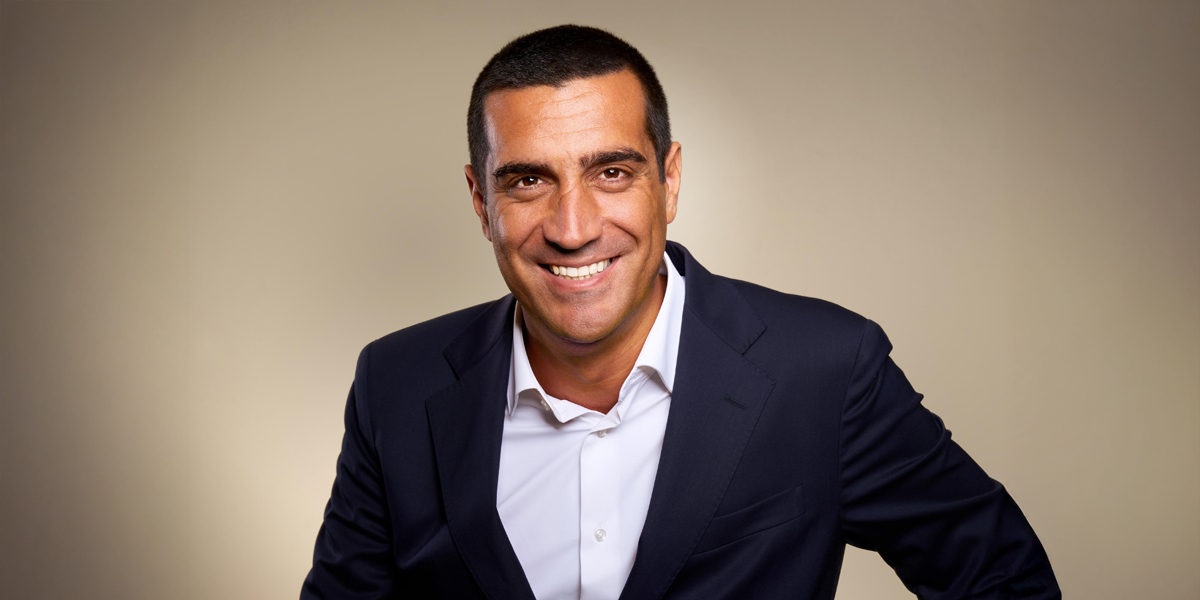
20 Nov Interview with Michele De Pascale, President of Emilia-Bologna, Italy
BF: What are your main strategic priorities for 2024–2029, and how do you envision Emilia-Romagna evolving over the next five years?
De Pascale: We’re beginning a new legislative cycle focused on two key priorities. First is the protection and relaunch of our universal public healthcare system, one of the strongest in Italy and a core part of our regional and national identity. Unlike other regions, Emilia-Romagna’s healthcare is almost entirely publicly managed, and we are committed to ensuring access for all citizens, regardless of income. Second is revitalizing our manufacturing sector. Emilia-Romagna is Italy’s top region for per-capita exports, but we face major challenges. Industrial production has declined for 26 consecutive months, and Europe’s manufacturing sector is in crisis. Rebuilding this strength will be central to our strategy through 2029.
BF: How would you define Emilia-Romagna’s current role within the Italian economy?
De Pascale: Emilia-Romagna is one of Italy’s key industrial engines, especially in Central-Northern regions. We lead in high-value sectors like automotive, biomedical, ceramics, and agri-food. Our industries combine complexity, specialization, and innovation, making us one of the most advanced regions in Italy. Thanks to the quality of our output, we also have one of the world’s highest export potentials.
BF: What is your short- to medium-term outlook for Emilia-Romagna’s economy in terms of trends and challenges?
De Pascale: A key priority is attracting talent. At the end of the last legislative term, we passed a regional law to support this. With a rich university ecosystem—led by the University of Bologna, the oldest in the Western world—we’ve launched a robust regional plan to make the region more welcoming. Housing remains a top concern, along with the need for international schools to support incoming professionals and their families. Another focus is simplifying permitting processes. Drawing on my experience as a former mayor, I’m committed to ensuring international investors aren’t overwhelmed by bureaucracy. In Emilia-Romagna, we streamline approvals and support business setup efficiently. The third, and perhaps most critical point, is supporting our production system, especially for international markets. Our strong ties with the U.S. are part of our DNA, but recent global events have come at a cost. The war in Ukraine and the resulting energy crisis, particularly affecting the port of Ravenna, have driven up energy and raw material costs, straining our manufacturing base. I’ll be in New York soon to discuss strengthening our U.S. ties. These relations are historical, cultural, and vital to our economy. At the same time, we must diversify. The Far East presents new commercial opportunities, though the consumer habits differ. To enter these markets, we’ll need more research, innovation, and regional support for adapting our production and logistics systems.
BF: What initiatives are you implementing to enhance the tourism experience and support sector growth?
De Pascale: Emilia-Romagna offers three major tourism experiences. First, our network of UNESCO art cities – Ravenna, Ferrara, Bologna, Modena, and Parma – boasts rich cultural heritage and world-class theatres, without the overcrowding seen in cities like Rome, Florence, or Venice. Second, we compete with top Spanish destinations through the Riviera Romagnola, known for beach and sports tourism. Third, our region features two national parks and the Po River Delta, an area of exceptional natural beauty. We’re also focused on accessibility. Bologna operates at an international scale, and the airports in Rimini, Forlì, and Parma are expanding. A major cruise terminal is under construction in Ravenna, and with cruise ships shifting from Venice to Ravenna due to restrictions in San Marco, we’re now seeing more U.S. visitors arrive here and explore Emilia-Romagna before continuing on Mediterranean cruises.
BF: In which sectors do you see the greatest opportunities for U.S. collaboration, and what types of partnerships are you encouraging?
De Pascale: Our region is a global hub for luxury automotive and motorsports. Brands here produce high-performance cars and collaborate with Formula 1 and MotoGP. The same advanced research in aerodynamics and materials is also applied to aerospace. We’re equally strong in agri-food. With our DOP-certified products, consumers know exactly where their food comes from – from wheat fields to the Parmigiano-Reggiano production line. We’ve had tensions with the U.S. on this front, but we believe that true free trade requires transparent consumer information. Without it, there’s no real freedom of choice. Other major sectors for U.S. collaboration include pharmaceuticals, biomedical technology, and ceramics, where we lead in European quality and innovation. The U.S. remains a vital and growing market for all of these industries.
BF: What role does innovation play in your development agenda, and how can U.S. stakeholders engage with the region’s tech ecosystem?
De Pascale: Bologna is one of Europe’s top three supercomputing hubs—alongside Barcelona and Finland—and leads major EU projects in artificial intelligence. The Bologna Tecnopolo hosts Leonardo, the most powerful supercomputer in Europe, as well as two additional EU-backed infrastructures. Managed by CINECA, a consortium of all Italian universities, the center focuses on three key missions: applying AI and supercomputing to industry, climate change, and public health. We already collaborate with U.S. institutions like the University of Virginia and are open to expanding those partnerships.
BF: Could you share your vision for your upcoming visit to New York City?
De Pascale: New York holds personal significance – part of my family emigrated there from southern Italy. On this institutional visit, we’ll participate in the Fancy Food Show to reaffirm Emilia-Romagna’s global role, especially in food and wine exports. The U.S., particularly New York and the East Coast, is a key market for products like Parmigiano Reggiano, Lambrusco, Sangiovese, and Albana. We’ll also strengthen ties with the North American Italian Foundation (NIAF) and meet with the Italian-American community at the Consulate. Another important goal is engaging with the Italian medical and academic communities, many of whom are from Emilia-Romagna. We want to offer them opportunities to return and to create an ecosystem at home that matches the excellence they’ve experienced abroad, especially in public health, research, and technology.
BF: What is your final message to American investors and entrepreneurs?
De Pascale: Emilia-Romagna is an open, welcoming region for investment. We value the enduring relationship between the U.S. and Europe, built on shared values, vision, and long-term strategy. If challenges arise, we address them without losing sight of our common path forward.
Sorry, the comment form is closed at this time.