
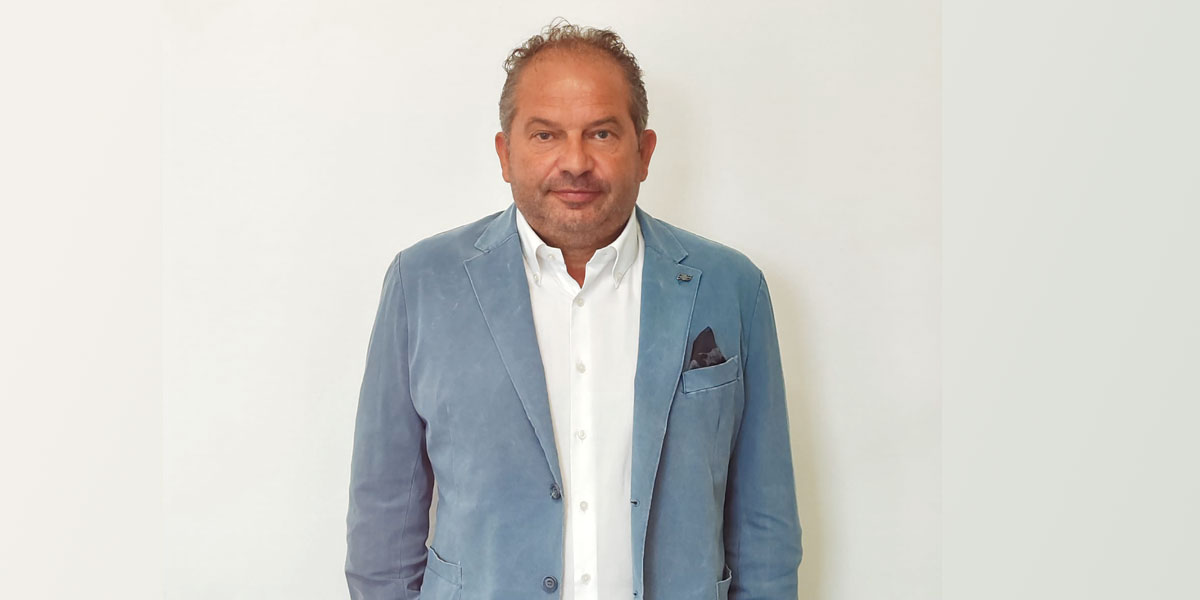
20 Oct Interview with Andrea Nascimbeni, CEO, 4 Madonne Caseificio dell’Emilia
Over 50 years ago, 4 Madonne was founded as a modest cooperative, deeply rooted in the agricultural traditions of Emilia-Romagna. Could you introduce the cooperative to our readers and how its founding values have been preserved while leading a multimillion-euro business?
4 Madonne is a cooperative with about 80 members. In 1967, the cooperative was much smaller, not in terms of members but in the number of wheels produced. 4 Madonne transforms milk into Parmigiano Reggiano. We have eight warehouses in three provinces: one in the province of Bologna, four in the province of Modena and three in the province of Reggio. Due to mergers in the past 15 years, these warehouses have been consolidated into 4 Madonne. Seven cooperatives in difficulty joined our company. This included their properties and the members.
Over the years, some members are no longer active because the company closed. Production has evolved over time. In 2010, 4 Madonne produced about ten thousand types. In 2025, production will be estimated at about 150 wheels. In addition to the producers, suppliers and milk producers, we have partners who lend us money because they believe in the cooperative. They do not have land and stable milk production, but they have the liquidity. This contributes to managing the cooperative throughout the year. Parmigiano Reggiano is sold for 12 months. The members are paid after 13 or 14 months for their milk. We need a lot of liquidity to be able to support members during the year when they ask us for an advance.
In January 2025, 4 Madonne acquired the Del Parco dairy in Ramiseto di Ventasso. It was an ambitious move into mountain areas. What is the strategic value of this acquisition and how does it support your long-term growth ambitions?
The Parco Ramiseto office is our last acquisition. It was a well-built office about 20 years ago and it will be with us for many years; it does not need any maintenance. We wanted to keep it alive in this mountain region. If we had not acquired and kept it open, the building would have probably closed and ten people would have lost their jobs.
We have been able to bring more milk into this structure. It is currently working at 80% of its capacity. We really wanted to help the region. All of our eight mergers are scattered throughout the region, including the areas of Bologna, Modena and Reggio Emilia where we cover the entire production area of Parmigiano Reggiano. The farmers in the area can continue to produce because a dairy near their home is transforming milk into Parmigiano Reggiano. A couple of months ago, we received payment from regional contributions that come from the European Community. They give a bonus to the cooperatives that have made mergers in the last two years. With this support, we are thinking about making a storeroom.
You produce a wide range of Parmigiano Reggiano varieties such as organic, mountain and red cow, each with its own characteristics and specific requirements. How does this biodiversity strengthen your product offering and brand positioning?
As we are positioned on a mountain plain, our production captures all the biodiversity found in the Parmigiano Reggiano Mountain Product. Some of our companies produce organic milk. We do the processing separately. We also age the cheese to 100 months. In the three provinces, we do direct sales with 12 shops. Next September, we plan to open a new shop in the center of Mantua. Several years ago, we started providing these shops with the more aged Parmigiano Reggiano to please a certain type of customer. In the United States and for export sales in general, we structured our organization as a cooperative. Over the last two years, we have expanded our e-commerce abroad where we have 17-18% direct sales. The remainder is obviously the Italian product. We are very interested in the American market as well as the French, German and Spanish markets.
How important is e-commerce for your overall business model today? Do you see potential for growth in international markets, particularly in North America?
The results are very positive and have increased in double figures annually, we are achieving 20-25% annually, with minimum promotion efforts. We are quite aware of word of mouth promotion amongst our clients and their friends. We also do guided tours. In 2025, we had almost 25,000 tourists, 70% of whom were foreigners and 25% were Americans. This also contributes positively to our e-commerce sales. At the end of a tour, the tourist knows the entire production process, experiences a tasting session and buys a small piece of cheese to bring home. Due to weight and flight restrictions, online orders have become more common. The product arrives at home in their country and in most cases, at a cheaper price.
With strict regulations on animal welfare and feed, combined with your solar energy initiatives, sustainability is clearly a core part of your model. How do you view the future of ethical dairy farming?
All of our producers care a lot about animal welfare, not just because the European Community has some restrictions. We know that if the animal is well, it produces better and has a longer life. There are also controversies about the use of too many antibiotics. They actually cost a lot, but unfortunately, sometimes the animal needs it. There are many issues about keeping animals in a stable because they are naturally predatory animals. The stables can be hot and full of insects. Covered stables aired to the maximum with fans, are much better than aired stables. When the temperature rises, the water starts and the fans go strong or slow depending on the temperature and humidity.
Furthermore, we would like to install photovoltaic panels to use solar energy in the farms. We are also looking at a biogas plant that produces electricity from the waste of the animals. The manure and liquid that comes out of the stable first produces electricity and can be stored. Our productions are sustainable both for the environment, for people and for animals.
Parmigiano Reggiano reaches customers around the world, yet it remains one of the most imitated cheeses globally. What are the main challenges and opportunities in exporting such a culturally specific and protected product?
We have been working on our cheese quality for years. We have won many awards, several in 2025. Quality remains key in our cooperative. I believe that this is extremely important for export. In terms of sustainability, Parmigiano Reggiano demonstrates this in the production process and with its concern for animal well-being. As a protected-origin certified cooperative, we are limited in the products with which we can feed our goats: 75% of the products must be made in our companies and in our region.
We have other restrictions on feeding schedules, for example. We need to feed twice a day with milk delivered twice a day, in the evening and in the morning. We cannot cool the milk below 64 degrees fahrenheit. This enables it to maintain much better qualities as compared to a lower temperature. When the temperature drops, various microbial flora die.
Furthermore, we have a minimum aging of 12 months for our cheese. We have experts that control the wheels one by one to be classified as high quality under the Parmigiano Reggiano name. For this reason, we have higher costs compared to Grana Padano. It is also a PDO cheese but with less specifications which gives it a lower value.
How do you keep young people in the city to produce and ensure continuity?
The job is more difficult than before. The climate has changed and become more unpredictable. In the work with Parmigiano Reggiano, it is known that if you work well, it is profitable. Young people are attracted to this. The average age of Parmigiano Reggiano producers has dropped a lot. There are regional incentives for young people who want to start in this business or join their parents’ business. After the pandemic, I believe that we all want some fresh air in nature. With this job, there is an opportunity to work outdoors, in the sun and in the cold, depending on the season. This quality of life is appreciated more compared to the pre-Covid period.
With growing revenues, new digital capabilities and ongoing strategic expansion, 4 Madonne appears poised for a new phase of development. What is your long-term vision for the cooperative between now and 2030? What is your final message for the millions of USA Today readers?
Parmigiano Reggiano, well-known in the United States and worldwide, is a natural product with no added preservatives. I believe this is its most important characteristic, especially for a cheese aged between 24 and 48 months or even up to 100 months. Our Parmigiano Reggiano’s quality begins with the milk producers. We work closely with them to ensure the milk we receive meets the highest standards. We have skilled cheesemakers who expertly transform this milk into authentic Parmigiano Reggiano. As mentioned earlier, we have also received international awards, which confirm that we produce an excellent product that sells well, exports successfully and leaves a strong impression.
Sorry, the comment form is closed at this time.