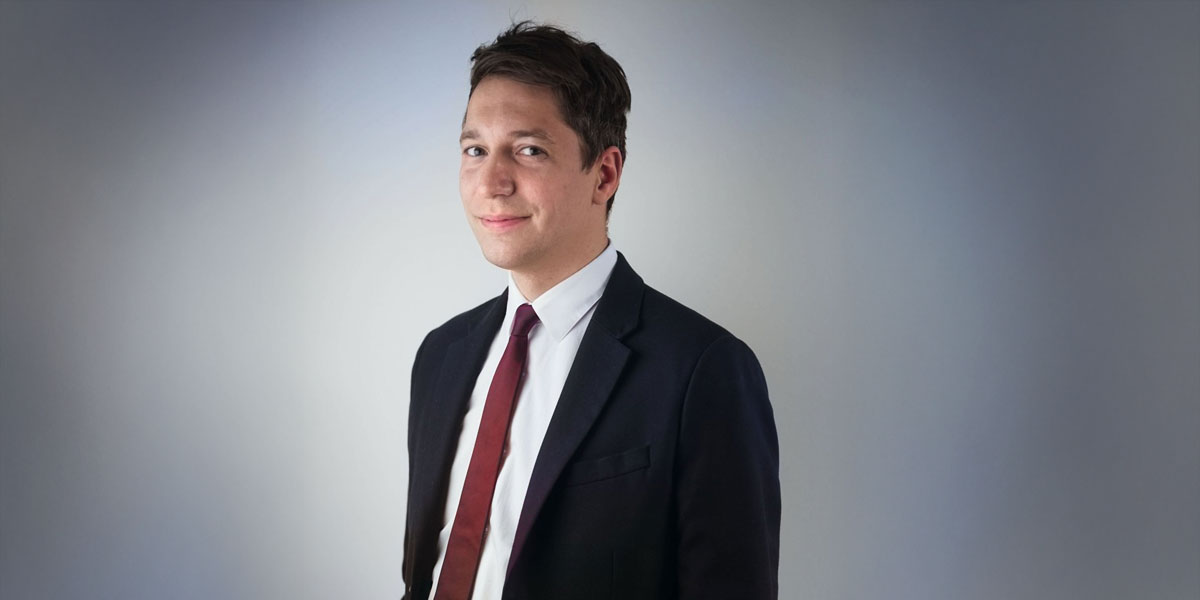
24 Oct Interview with Dr. Massimo Bercella, CEO, Bercella
Bercella has become a benchmark in high-performance composite solutions, from ESA satellite structures to racing monocoques. What’s the common thread in how you approach such diverse, high-stakes sectors?
The space industry and motorsport share the same goal: using the best technology and products available. Our strength lies in our flexibility. We can quickly develop new solutions while relying on the solid heritage and know-how that our customers trust. Developing a satellite structure can take years, not because the process is slow, but because it involves many steps, adjustments and improvements along the way. Our Italian manufacturing culture embraces this flexibility and adaptability, which gives us a strong advantage over many competitors in Europe and beyond.
In the space industry, we have a bit more freedom to share what we do, unlike other sectors where strict NDAs keep everything confidential. Space still has a strong scientific culture that values openness.
Currently, we are working on two key projects: one with Leonardo to produce structural parts for the IRIDE constellation and another with Airbus Netherlands to build substrates for solar arrays for a satellite by MDA in Canada. Traditionally, space projects were low-volume and mission-focused, but since SpaceX disrupted the market, we see growing demand for high-volume satellite constellations. Projects like IRIDE and Aurora show how we combine the quality and technology of space with the high-volume production we’re known for in automotive and motorsport — and this is exactly the direction we want to keep growing in.
As a high-tech manufacturer, R&D is at the heart of what we do. We aim to stay ahead by applying cutting-edge technologies to our projects. In 2022 and 2023, we launched two major EU-funded projects: TOOL4LIFE and ZeroWasteLIFE. Both are strategic for bringing circular economy principles into our production. TOOL4LIFE, for example, uses large-scale 3D printing to produce tooling with recyclable materials. At the end of their life, these tools can be shredded, reprocessed and reprinted, cutting waste and reducing our carbon footprint. ZeroWasteLIFE focuses on automating processes to minimize carbon fiber waste in production. While true zero waste is a goal rather than a reality, the project aims to significantly cut our environmental impact and carbon footprint. This isn’t just about sustainability — using less material and recycling waste also means lower costs for us and our customers. For us, environmental responsibility and cost efficiency go hand in hand.
How do additive manufacturing and bio-based materials fit into your roadmap?
Bio-based materials are unlikely for us, as we produce mission-critical structural parts where top performance is non-negotiable — for example, a race car monocoque must protect lives. However, we see great potential in 3D printing, mainly to make tools and molds for now. Using it for structural parts isn’t feasible yet, but it could be in five to ten years.
Is international expansion especially toward markets like the US part of your vision for Bercella in the coming years? Are there active dialogues or potential partnerships with North American companies or institutions?
We are in confidential talks at the moment. Our main focus is the space sector and the biggest market now is the US. While we can supply globally, being closer to customers is always an advantage, which is why the US is our top priority for future expansion. We value working closely with universities, even though in Italy there is often more distance between academia and SMEs than in the US. Internships are key for us — universities are our main source of engineers, rather than hiring from competitors. We have strong ties with the University of Parma, Politecnico di Milano and Politecnico di Torino. I studied at Parma myself and did my MBA at Bologna Business School, which is another important partner for us.
As someone leading a second-generation company in one of Italy’s most specialized industrial niches, how do you balance heritage with innovation?
I was lucky — my father has always been an early adopter, passionate about new technologies and constant innovation rather than tradition. A few years ago, my brother and I decided to focus strategically on two core sectors: space and motorsport. We aligned our processes, R&D and manufacturing around these markets to drive growth. This marks the shift from the first to the second generation but we are still a family business, as is typical in Italy, but we are transforming it from a small company into a true industrial player by concentrating on these two areas.
How do you approach storytelling and media exposure in an industry that often works behind the scenes?
Brand awareness has always been our main challenge. For about a year now, we have worked with BPRESS to help us reach beyond our usual boundaries. The difficulty is that we can rarely share how we achieve our results — the technical details are confidential. In the space sector, which has a scientific culture, there is more openness and freedom to talk about projects, which helps. However, in automotive, secrecy is the norm, so it’s harder to communicate what we do.
Emilia-Romagna holds a strategic position in Europe. What are the main advantages of having a base there to attract more competitors to your region?
For high-end automotive, this region is unmatched — home to Ferrari, Dallara, Maserati, Lamborghini, Pagani and Ducati. Being here gives us a huge advantage working with these top brands and their cutting-edge technologies, which we then apply to other industries. Motorsport taught us to meet tight deadlines and high quality standards — unlike aerospace, where delays are common, a race date is fixed and non-negotiable. This mindset, rooted in Motor Valley, has been key to our success in space and beyond.
How many people does Bercella employ and how does your company support the region through direct and indirect employment?
We have 110 employees and our supply chain is global for key raw materials like carbon fiber, mainly sourced from a few Japanese companies. However, subcontracting and machining suppliers are local. For community impact, we co-founded a training center about 10 years ago with Dallara near a local technical high school. There, we teach carbon fiber, 3D printing and CNC skills.
This Innovation Farm now trains hundreds of students and unemployed people annually, offering advanced technical education. In 2017–18, we partnered with the Gene Haas Foundation to create a CNC operator training facility. We provide both theoretical and hands-on training, and many graduates go on to work with us, Dallara, Ferrari and other local companies. This initiative is one we are deeply committed to.
Looking ahead, what kind of legacy would you like Bercella to leave not only in terms of technology, but in shaping how we think about the future of advanced manufacturing?
Our legacy will be embracing the future of technology without fear. Even as automation and AI advance, our high-level manufacturing demands the best people at the core of innovation. Talent will always be key to our success.
Emilia-Romagna offers more than tourism — though that’s a key part of our economy. It’s also home to the highest concentration of high-end car and motorcycle makers. If you want the best technologies and suppliers in automotive, this is the place to be.
Sorry, the comment form is closed at this time.