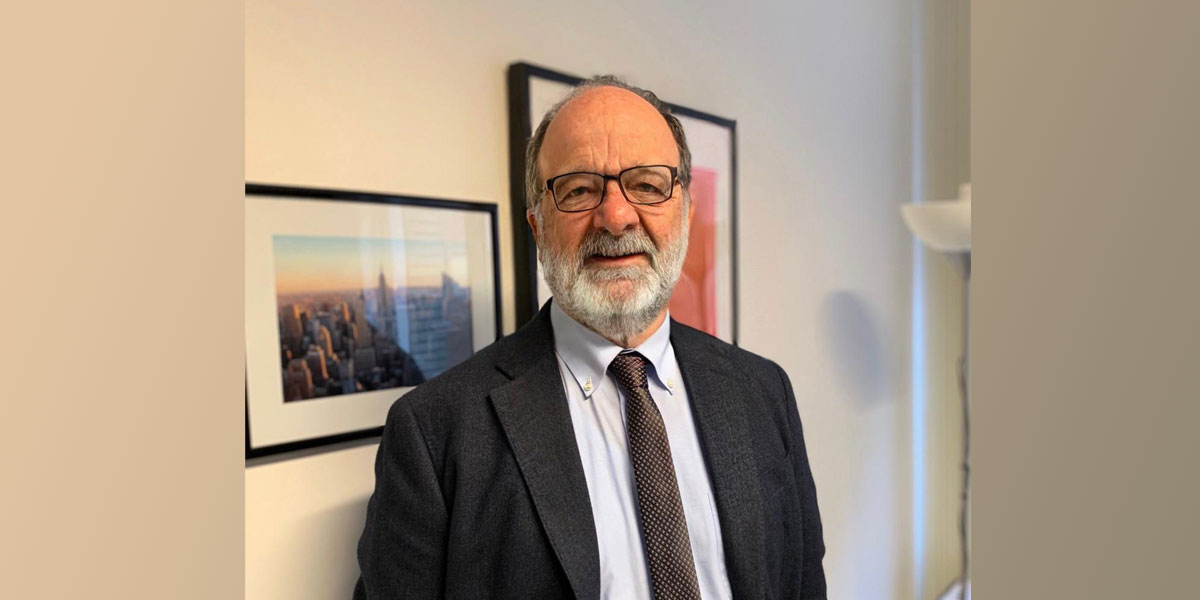
30 Oct Interview with Roberto Righetti, Director of ART-ER, Emilia-Romagna
Emilia-Romagna boasts one of the highest GDP per capita rates in Italy and Europe, with over 440,000 businesses anchored in innovation, manufacturing and global trade. What are the main trends shaping the region’s economic landscape today?
Emilia-Romagna stands out for its strong industrial specializations and focus on high-quality production. We don’t just have a strong GDP per capita — we are also the top Italian region for exports per capita, far ahead of others. Our products are in demand globally because they are innovative and specialized. Even in times of uncertainty, such as discussions around tariffs, our goods remain competitive and resilient in international markets.
We continue to invest in quality and in strengthening collaboration among our many small and medium-sized enterprises. These networks are key: when the lead company in a cluster grows, the entire ecosystem benefits. We call this our ‘Specialization Valleys’ — like the Motor Valley and Food Valley — each representing a hub of excellence rooted in tradition, innovation and global reach. One of our key strengths is the diversity of our industrial base. Emilia-Romagna is a manufacturing powerhouse, not just in automotive, but also in food, ceramics, biomedical and more. This diversification gives us balance: when one sector slows, others can compensate. Much of this resilience comes from our historic expertise in mechanics, which supports many industries. For example, we don’t just produce food, we build the machines that package it. The same goes for ceramics and the equipment used to manufacture tiles. This integrated ecosystem keeps us competitive across sectors.
Now, we are developing what we call the ‘Data Valley.’ Like our other specialization valleys, it’s cross-sectoral and has the potential to transform industries from manufacturing to healthcare. It’s a new frontier for innovation in the region.
Designated by the European Commission as a Regional Innovation Valley, Emilia-Romagna is positioning itself as a European hub for science and technology. How do you assess the region’s innovation performance today and what factors have contributed to its success?
Emilia-Romagna ranks as the top innovation region in the EU’s Regional Innovation Scoreboard. This reflects the mindset of our entrepreneurs, who are deeply committed to quality and constant improvement. It’s a tradition rooted in our history.
Emilia-Romagna has strong universities in nearly every city and for over 20 years, the regional government has prioritized innovation, fostering close collaboration between academia and industry. This led to the creation of Technopoles, research clusters and infrastructure dedicated to innovation. We are now facing major shifts — sustainability and data — which require not just improvement but transformation. Fortunately, our entrepreneurs and researchers are not conservative; they are open-minded and adaptable. Our region is home to many niche leaders like Ferrari. It may be small compared to global giants, but it dominates in quality and innovation. That mindset — embracing change and striving for excellence — is what drives Emilia-Romagna forward. Innovation and collaboration are in our DNA. There is a spirit of ‘coopetition’ — working together while pushing each other to do better. For many entrepreneurs here, success isn’t just about money; it’s about doing things the best way possible, then the money follows. I have met firms that started by making small parts for Formula One and are now entering aerospace. It’s not just a shift in industry, it’s a mindset of constantly asking, ‘What’s the next challenge?’ That drive for excellence is what defines our region.
Mortadella was the first product from Emilia-Romagna to receive official registration worldwide. Registry and certification are not just about protecting tradition, they ensure quality through a transparent, traceable process which builds trust. It shows that every step, every person involved is accountable and that improvements are made when needed. For investors, this means confidence in how we work. It’s also what sets our entrepreneurs apart: we are reliable and even public institutions are open to solving problems when approached. Joey Saputo, owner of Bologna FC, once said, ‘In Bologna, if I want to speak to the mayor, I ring the bell and he listens.’ That accessibility defines our region. Whether it’s public officials, business leaders, or associations, you can reach them quickly and directly.
One of our largest recent investments, Philip Morris, was promised a 15-month timeline and launched in 14. The key wasn’t speed, but reliability. What matters most to investors is knowing they can plan with confidence. We don’t over-promise — we deliver. That clarity and trust are essential to how we work.
Since its inception in 2019, ART-ER has been the driving force behind Emilia-Romagna’s innovation ecosystem, uniting research, entrepreneurship and regional excellence. Could you walk us through ART-ER’s founding mission and the standout achievements that best reflect its impact on regional advancement?
ART-ER stands for Attractiveness, Research and Territory in Emilia-Romagna — three pillars of our work. I like the name because it reflects creativity and the ability to build something from nothing. In attractiveness, we support Italy and the region’s main investment incentive schemes, helping companies that want to establish or expand in Emilia-Romagna. In research, we coordinate a network of specialized labs, from materials to motors to energy, connecting them with businesses to foster innovation. Territory means anchoring all this in real places, working with local governments, universities and institutions.
Every project, like a Technopole, is tied to a city, a plan and local infrastructure. Managing these connections, especially with a focus on sustainability, is essential to our role. We also focus on less economically developed areas within Emilia-Romagna. The region is uniquely shaped by the ancient Roman road, Via Aemilia, which connects towns about every 30 kilometers — a system designed for travelers to rest and resupply. Most development is along this route, but some areas have grown more slowly, so we work to create jobs and support growth there.
ART-ER is a consortium that brings together the Emilia-Romagna regional government, universities and national research centers like the CNR in Bologna. This collaboration helps coordinate regional development and innovation efforts.
ART-ER supports initiatives like IT4LIA, the Italian AI Factory based at Bologna Tecnopolo, home to some of Europe’s most advanced computing facilities. What is ART-ER’s contribution to the development and coordination of IT4LIA and what are the main objectives of this initiative?
Years ago, we discovered that Bologna hosts Italy’s largest data management capacity through CINECA, a university consortium managing the Leonardo supercomputer. CINECA is based just six miles from here, in Cattolica. With support from a former economy minister, we brought together regional data experts, including teams from the University of Modena, to create the Big Data Association. By chance, when Brexit made the European Centre for Medium-Range Weather Forecasts (ECMWF) look for a new data center location, we offered our capabilities and they chose Bologna. This was a major investment and a huge opportunity for the region.
The EU decided to invest heavily in big data and AI and we successfully won a tender with CINECA, which has the expertise and infrastructure. Bologna is now home to one of Europe’s three pre-exascale supercomputers, alongside Barcelona and Helsinki. Our team at ART-ER manages the redevelopment of an old tobacco factory into a new Technopole. This site will host ECMWF, the Leonardo supercomputer, the AI Factory and a UN university center focused on sustainability and migration. The facility supports research and offers local firms access to advanced data management tools to innovate and grow. We assist companies in leveraging this infrastructure, helping turn data into business opportunities. We handle complexity by connecting different points in a network — universities like Modena and Bologna ask for our support to link their activities to the supercomputer.
Our focus is facilitating connections between firms’ diverse needs and the experts managing the facility. For example, car development can now be simulated virtually with data, replacing slower, costly physical testing. Instead of sending people abroad to manage processes, companies can run simulations here, predicting machine performance over time and planning accordingly.
There are many applications in public health. For example, we recently developed a project using lung X-rays and large datasets that can’t be handled by standard PCs to identify health issues. This work takes place at Data Manufacturing Technopole in Bologna. The AI Factory, an evolution of the Leonardo supercomputer, supports the EU’s goal to make big data accessible to businesses. While research is key, supported by partners like the National Physical Institute, helping firms access and use these advanced machines is complex. Our future role will be to guide companies in collecting and managing data to fully benefit from this technology.
Leonardo’s capacity for data management is still growing and will remain a work in progress for years. New modules are being added, supported by funding to help firms use this infrastructure. Located in northern Bologna, the Technopole covers 140,000 square meters and is a major investment. The supercomputer hardware, managed by CINECA, consists of thousands of interconnected modules, complex but powerful, capable of billions of operations per second. The Technopole aims to attract firms and researchers working with big data. The city plans to develop the surrounding area into a vibrant hub where professionals can live, work and innovate without needing to be in the city center.
Bologna’s strategic location, with easy access to Milan, Rome, mountains and sea and its well-connected airport make it ideal for experts and investors. Plus, English is widely spoken, easing international collaboration.
How does ART-ER’s focus on green innovation align with Emilia-Romagna’s long-term goals for a more sustainable economy?
We run an incubator focused on sustainability called Ecosystem, the first state-funded project of its kind. It brings together researchers working on materials, the circular economy and related fields to collaborate on innovative solutions. This three-year program will continue to unite experts, driven by two key ideas: sustainability is a market priority, especially for younger generations demanding eco-friendly products and climate adaptation is urgent.
For example, after recent floods, we are focusing on managing extreme weather — handling sudden heavy rains and prolonged droughts — to better protect our region. We don’t have water shortages now, but better water management is crucial for agriculture, industry and drinking quality. Our recent floods occurred because small rivers couldn’t handle intense, heavy rainfall in a short time, showing the need for improved systems.
Strategically, we must focus on improving weather forecasting. While we can’t prevent floods entirely, better forecasts help manage systems, save lives and support timely responses. Accurate forecasts enable precision agriculture — watering crops only when needed — and help address health issues by guiding prevention efforts. Having the ECMWF data center locally means our regional meteorologists get real-time, detailed data to improve forecasts and responses. This close access helps us learn and adapt faster.
In 2015, ART-ER launched its first innovation outpost in Silicon Valley, creating a direct bridge between Emilia-Romagna and the world’s most dynamic tech ecosystem. How does this international hub enhance the global visibility of Emilia-Romagna, its startups and research institutions?
In 2000, we were the first region to create a bridge for startups to connect with key global markets. This early investment led to a national hub, where we continue to support startups within a broader Italian framework. We maintain strong ties with the US, collaborating on innovation and research, especially in food with New York and health with Boston. Our municipalities work closely with the University of Virginia and both the US President and Vice President have encouraged us to deepen these partnerships.
The US is like a second home — not just a market but a place with deep emotional ties. Our connections go beyond trade. Working with the US feels very different from working with countries like Spain or Korea. Our culture is closely connected to the US through music, cinema and shared values. I agree with the president and vice president that we must deepen this relationship. More connection means greater opportunity and clearer understanding. For example, we export more goods to the US but import more services, which many don’t realize. We use platforms like Netflix, Prime, Google — areas where European firms are scarce. This should encourage more cooperation, but uncertainty makes investors cautious. Clearer communication is key to moving forward.
Sorry, the comment form is closed at this time.