
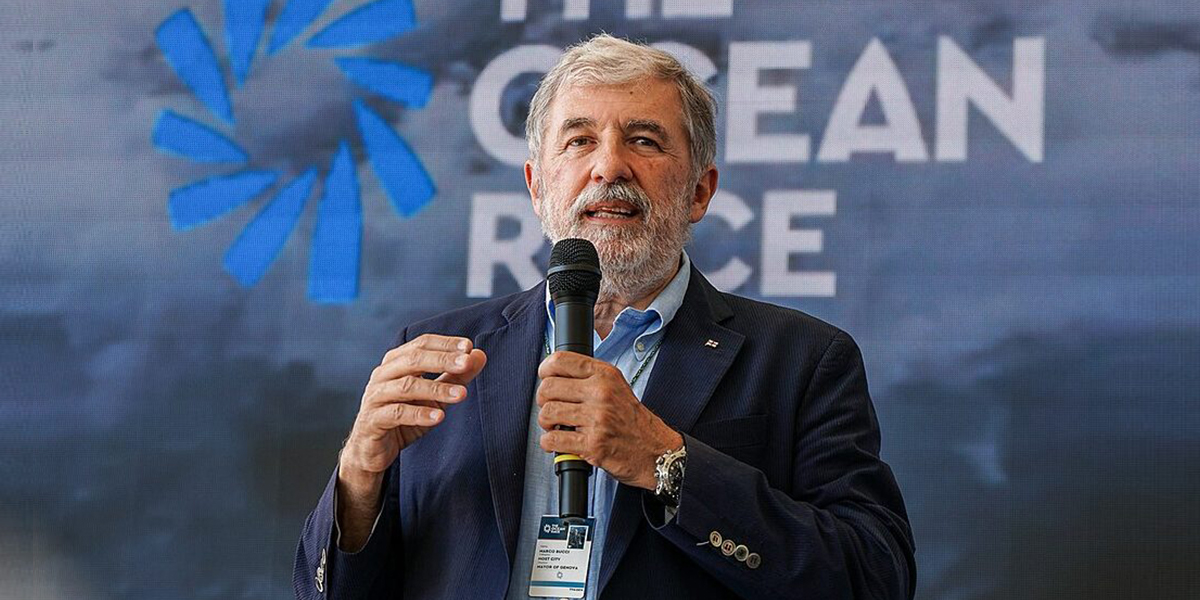
20 May Interview with Marco Bucci, President of the Liguria Region
What are the measures you have taken as president of the Liguria region since you were elected in October and what does your success represent in terms of the movements in Italian politics?
In the past months, we have focused on healthcare, job creation and advancing our €18 billion infrastructure plan. Liguria plays a key role in Italy’s and Europe’s blue economy, a pillar of our development. We are investing heavily in infrastructure, healthcare and the blue economy to drive regional growth.
Can you describe the importance of the port and maritime sector of Liguria and what investment opportunities there may be?
Liguria’s ports generate 200,000 jobs and serve as the Mediterranean’s key logistics gateway, integrating sea, land, rail, air and highways. The region is also a digital hub, with major internet cables landing in Genoa, supporting data centers and cybersecurity. Leonardo, Europe’s leading cybersecurity firm, is based here, ensuring secure data management. The future of logistics is digital, combining AI with the movement of goods, people and information.
What strategies are you adopting to enhance the region’s cultural and natural heritage and what would you say to our USA Today readers who may be considering holidaying in Italy?
Tourism is a key pillar of Liguria’s economy, alongside logistics and high-tech industries. In 2024, we welcomed 18 million visitors, with steady annual growth of 5-10%. Famous destinations like Cinque Terre and Via dell’Amore attract global tourists, but we also emphasize cultural experiences — museums, opera and theaters, including L’Entroterra/the Ligurian Hinterland, with historic villages in the mountains and along the coast. Leisure boating is another major draw. We manage over-tourism by promoting year-round travel, thanks to Liguria’s mild climate. Our goal is to offer an authentic Italian experience that makes visitors want to return.
Liguria saw heavy rainfall and landslides in October closing roads and schools. How are you balancing economic development against climate mitigation and how can Liguria be a leader in this area?
We have invested over €3 billion in hydrogeological protection, creating safe river pathways to prevent flooding. Liguria’s steep mountains help regulate the climate, but also pose hydrological challenges. Our region is remarkably green: 72% of Genoa’s municipality is forested, the highest in Europe. This gives us a positive CO2 balance, absorbing 3 million tons annually while emitting only 1.8 million. Liguria is one of the few regions worldwide with such a favorable environmental footprint.
We manage over-tourism by promoting year-round travel, thanks to Liguria’s mild climate. Our goal is to offer an authentic Italian experience that makes visitors want to return.
What will be the defining features of Liguria’s socio-geo-political landscape by 2030? What do you want to see?
In six years, Liguria’s GDP grew from €27,000 to €35,000 per capita, accompanied by a population increase and 200,000 new jobs. Tourism plays a major role in this growth. For example, the coastal town of Andora, with 8,000 residents, expands to 75,000 in summer, posing challenges for services like waste, water and electricity. Managing this seasonal surge has driven significant economic development, boosting jobs and local businesses.
Liguria’s high-tech sector is thriving, driven by the blue economy and software development for goods management. The region’s strategic position, combined with submarine internet cables, enhances data access and internet exchange, attracting businesses, especially small and medium-sized enterprises, fueling growth and innovation.
How does the region intend to promote its cultural heritage and strengthen ties with Italian-Americans?
Liguria has strong ties with the US, particularly in California’s Bay Area, where many Italian families have thrived for generations. Notably, three Ligurian families own one of the leading waste management companies there. Amadeo Giannini, a Ligurian, founded Bank of America and played a key role in financing the Golden Gate Bridge. Genoa also proudly claims Christopher Columbus, who first reached the Americas. In response to cancel-culture debates, I wrote to several US mayors, emphasizing that Columbus was a great explorer, not linked to slavery and should be remembered as a hero.
What are your programmatic priorities for Liguria in the coming years and what is your final message for the readers of USA Today?
Liguria offers an excellent quality of life, with top-tier healthcare, strong infrastructure and a thriving economy. We are investing €18 billion in development to create jobs and enhance services. It’s not just a great place to visit, but also to live and work, whether you enjoy boating, hiking or exploring our rich culture. The food is also an experience, featuring our famous pesto, focaccia and more. Come and experience Liguria.
Sorry, the comment form is closed at this time.